LabeljoyNew version
Code 128 is the barcode of shipping and logistics, and the one a new barcode in Labeljoy starts as. It's compact, it holds letters, digits and symbols, and every scanner reads it. With GS1 data it becomes GS1-128 - once called EAN-128 or UCC-128 - the barcode on pallet and shipping labels.
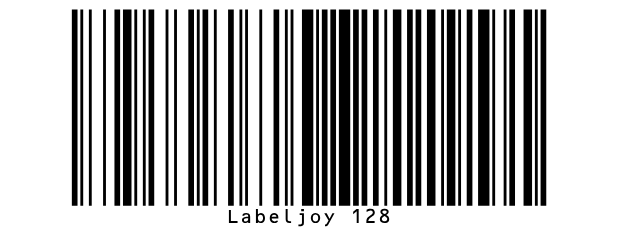 Code 128 | 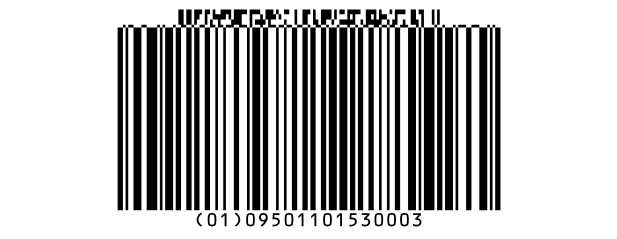 GS1-128 with a GS1 composite part |
| What it holds | |
| Characters | Every letter, digit and symbol on the keyboard, and the accented letters of Western European languages - é, ü, ñ and the like. The euro sign and other alphabets don't fit: use a QR Code for those. |
| Length | Up to 160 characters. Digits pack two to a bar pattern, so the bars hold about 80 letters or 160 digits. |
| Check digit | Always there, worked out by Labeljoy. It's in the bars, not in the readable text. |
| Modes | None to choose. Code 128 has three code sets - A, B and C - and Labeljoy switches between them for you, to keep the barcode as short as it can be. |
| Encoding | Standard, GS1 for GS1-128, or HIBC: see GS1 and HIBC data, which also explains the GS1 composite. |
| Readable text | The value. With GS1, the application identifiers are printed in round brackets. |
Characters you can't type. With Encoding set to Standard, a tilde followed by three digits is
the character with that code - ~009 is a tab, ~013 a carriage return - and ~~ is
a tilde.
The rest of the settings - text position, quiet zone, color - are in the Barcode section.
| What goes wrong | |
| Invalid characters in input data. | The value has a character Code 128 can't hold, such as the euro sign. |
| Input data too long. | Too many characters for one barcode. |
See also